
Warning: foreach() argument must be of type array|object, null given in /home/u935310590/domains/mark-design.net/public_html/wp-content/plugins/fusion-builder/inc/helpers/class-awb-attributes-helper.php on line 147
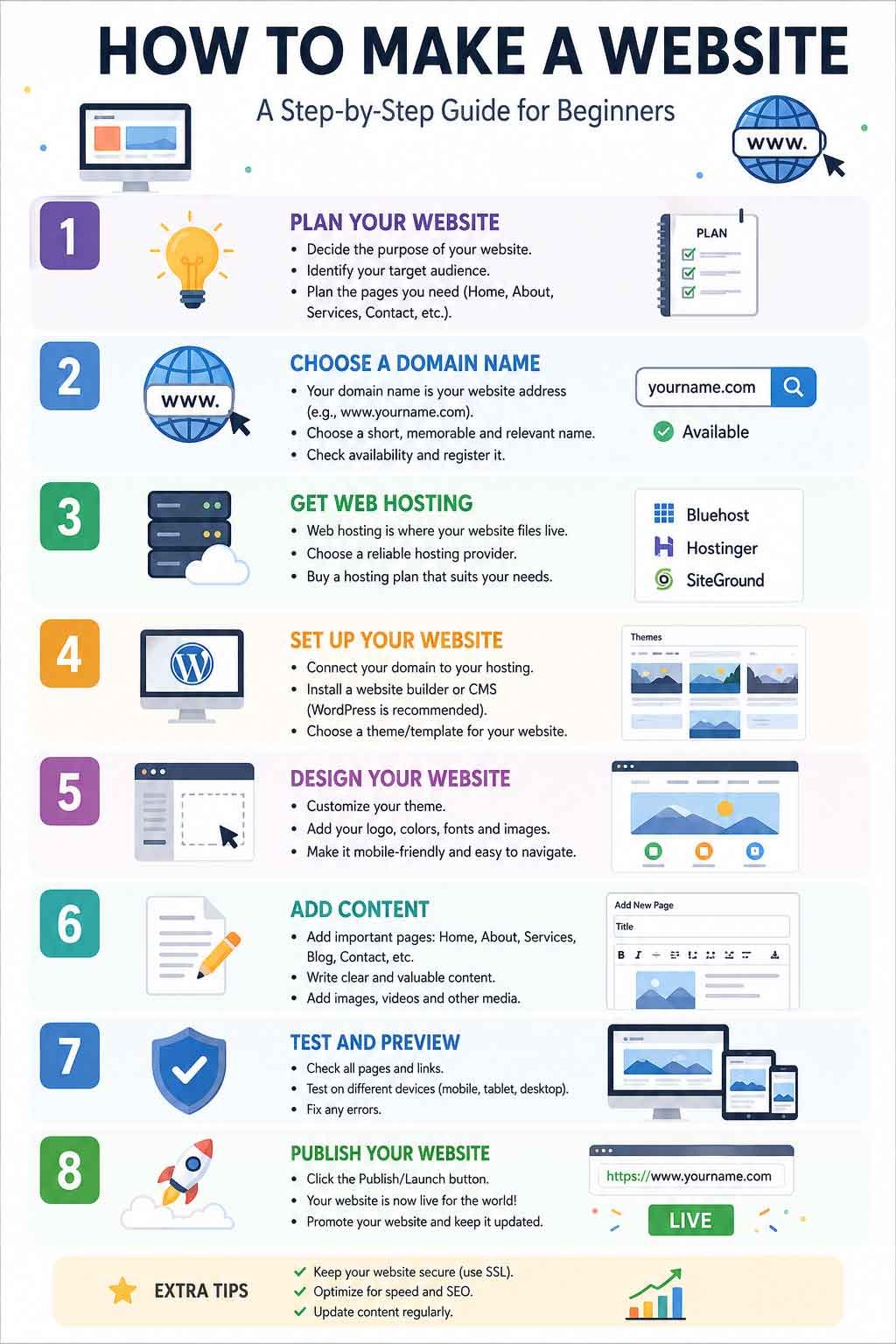
How to build a website in 2026
Every industry needs a website. Not the same website, though. A school site and a real estate site aren’t solving the same problem. Neither is a hospital’s homepage and whatever a transport company needs.
Doesn’t matter where you’re based. Delhi, Noida, Gurugram, Faridabad, Ghaziabad, or one of the smaller UP and Uttarakhand towns, think Lucknow, Kanpur, Agra, Varanasi, Meerut, Dehradun, Haridwar, the logic holds either way. Building your first site or patching up one that’s just sitting there, same story. Your industry should be deciding most of what goes on the page, not the other way around.
Here’s what actually matters, sector by sector, and why one generic template rarely covers all of it.
Websites for schools and educational institutes
Parents don’t browse a school’s site the way they’d scroll through a restaurant menu. They’re checking fee structures, admission dates, whether the place feels legit, and they’re doing that before they’ve even booked a visit. So the site needs a few things nailed down: a clear admissions process with real dates, actual faculty and infrastructure info, and photos of the actual campus. Not stock photos that could belong to any school.
An inquiry form that works matters here more than in most other categories. Parents fill it out before they call. And if the school’s in Delhi, Noida, Ghaziabad, or some smaller UP town, local search is basically what brings in that first wave of admissions each season. That has to be part of the site from day one. Not something someone remembers to add later.
Websites for real estate businesses
Real estate runs on trust and visuals. The site has to work almost like a live catalogue, listings searchable by location, budget, configuration, with decent images, floor plans, and RERA details sitting right there instead of buried in a PDF somewhere. Buyers across Delhi NCR, Gurugram, UP, and Uttarakhand tend to check five or six builder sites before calling anyone. Which means loading speed and how the site behaves on a phone aren’t extras. They’re what decides whether someone even stays on the page.
A lead capture setup tied to WhatsApp or a CRM helps too. A contact form that just quietly emails an inbox nobody checks? That’s a lead gone.
Websites for hospitals and healthcare providers
Healthcare sites carry a different kind of weight. Whoever lands on a hospital’s website is usually worried, about themselves or someone they care about, so clarity matters more than anything clever. Doctor profiles with specializations, department pages, appointment booking, a visible number to call, all of it should be a click or two away. Not buried three menus deep.
For hospitals across India, Delhi, and UP, local SEO does most of the heavy lifting, since people are typing things like “cardiologist near me” or “hospital in [city].” Beyond that, the site has to earn trust fast. Accreditations, patient testimonials, clear info on insurance and emergency care. Small details, but they’re what turns a visit into a walk-in.
Websites for transportation and logistics services
Transport and logistics get skipped over in most web design conversations, but this is a category where the site is doing what a phone call used to do. Fleet details. Service areas. Tracking, if that applies. Instant quote requests. These are the things that separate a site bringing in business from one that just exists somewhere online.
Operating across states? A clear map of routes and coverage, say Delhi to Kanpur and Lucknow, or hill routes through Haridwar and Dehradun, or pan-India logistics, tells a client right away whether you can actually handle their job.
Websites for manufacturing and industrial businesses
Manufacturing’s mostly B2B, and whoever’s looking at your site is doing their homework before they ever send an inquiry. Product catalogues, certifications, plant capacity, spec sheets, none of that should be buried three menus deep like it’s some kind of secret. A lot of manufacturing units around Faridabad, Noida, and Ghaziabad are still running sites that don’t even show up when someone searches for a supplier in their category. That’s enquiries lost month after month, quietly, and nobody really notices why.
A request-a-quote form, downloadable catalogues, a plain list of industries served. Small things, but they turn a casual visit into an actual lead.
Websites for restaurants, hotels, and hospitality businesses
Hospitality lives on visuals and reviews, plain and simple. Menus, room photos, a booking system that works, location details easy to spot the second someone lands on the page. Hooking that up to Google Maps and WhatsApp for direct bookings helps more than most people expect. Doesn’t matter if it’s a restaurant in Gurugram or Meerut, or a hotel in Rishikesh or Nainital, people are checking photos and reviews before they decide where to actually go.
What all of these industries have in common
A handful of things don’t change, no matter the sector.
Start with mobile. Most people browsing from Delhi, Lucknow, Dehradun, or some small town are doing it on a phone, not a laptop, so mobile-first isn’t optional anymore. Then there’s speed. It affects both how the site feels to use and how Google ranks it, and honestly, heavy unoptimized images are still the most common reason a site drags. Local SEO needs to be baked into the structure early, too, not bolted on after someone notices it’s missing, especially once you’re covering more than one city or state. And put a clear call to action somewhere a visitor can’t miss it. A form, a call button, a booking widget, whatever actually fits the business.
Targeting India, Delhi, UP, and Uttarakhand together
A lot of businesses working across India, Delhi, UP, and Uttarakhand make the same mistake. One generic page, hoping it ranks everywhere at once. It usually doesn’t. Search intent shifts city to city, and Google tends to favor pages speaking to one specific place over a single page vaguely claiming all of India.
The better move is location-specific pages. One for Delhi, then one for each major UP city, Lucknow, Kanpur, Agra, Varanasi, and another for Uttarakhand towns like Dehradun, Haridwar, Rishikesh. Each page gets its own content, contact info, and local references, but the core service pages stay consistent site-wide. That’s the structure we build for clients at Mark Design. We’ve been doing this out of Delhi since 2001, across schools, real estate, healthcare, transport, manufacturing, and hospitality, and honestly, it’s what actually works once you’re covering more than one place.
FAQ
Do schools, hospitals, real estate, and transport businesses really need different website structures?
Yes. The intent behind the search changes every time. A parent wants admissions info and trust signals. A property buyer wants listings and pricing. A patient wants doctor availability. A logistics client wants coverage and quotes. One template for all of them means missing what each visitor actually showed up for.
How important is mobile optimization for these industries?
About as important as it gets. Most searches across India, whether it’s a hospital in Delhi or a property listing in UP, happen on a phone. A site that isn’t built mobile-first loses people before they’ve even seen what’s on the page.
Can one website rank for multiple states like UP and Uttarakhand?
Not with one generic page, no. Location-specific pages, each built around a state or city with its own content and local details, consistently do better than one page trying to speak to everywhere at once.
How long does it take to build an industry-specific website?
A standard business site usually takes one to four weeks. Custom builds, a real estate site with searchable listings, say, or a hospital site with appointment booking, tend to run four to twelve weeks depending on what’s involved.
What’s the most common mistake businesses in these industries make with their websites?
Treating the website like a brochure instead of something that's supposed to work. A school site with no working admissions form, a real estate site with no searchable listings, a hospital site with no visible contact or booking option. All of it loses customers who showed up ready to act.
